Cannabis brands have spent years working around paid media restrictions. Search became the dependable channel because operators could build organic visibility, local profiles, menu pages, reviews, and educational content without relying on ads that platforms might reject.
AI search changes the assignment.
The goal is no longer only to rank a page. The goal is to be understood well enough that answer engines can cite, summarize, and recommend the brand without guessing. That requires more than blog volume. It requires source material, third-party mentions, clean entity signals, review depth, and compliance clarity.

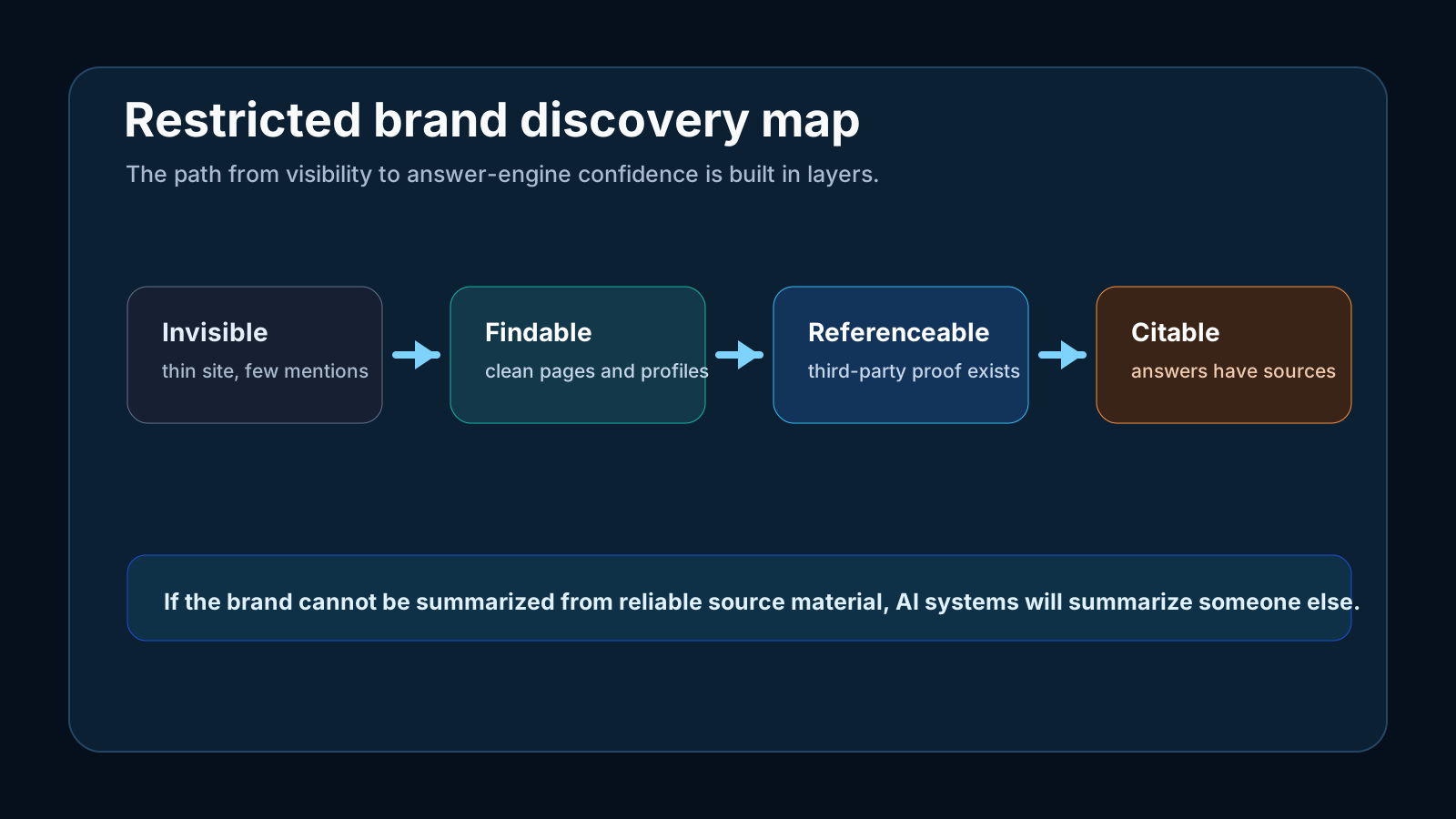
AI discovery rewards brands that are findable, referenceable, and consistent across the open web.
Discovery is becoming a citation problem
Traditional SEO asks whether a page can rank for a query. AI search asks a different question: can the system produce a confident answer from reliable source material?
That difference matters for restricted brands. A cannabis company can have a decent website and still be thin in the places AI systems use for context: third-party profiles, reviews, citations, trade coverage, structured local data, and consistent descriptions across the web.
Google Search Central's AI features documentation still points back to fundamentals: make content crawlable, useful, and eligible for discovery. ChatGPT search adds another behavior: answers may include source links when web results are used. That means the cited source layer matters.
If your brand has no clear source layer, answer engines may rely on someone else's summary, a menu aggregator, a Reddit thread, or a competitor's content.
What AI systems need to understand
A cannabis brand is not one page. It is an entity with relationships:
- Brand name, location, and operating regions.
- Product categories and availability.
- Compliance posture and store policies.
- Leadership, community activity, and retail partners.
- Reviews, media mentions, creator coverage, and local citations.
- Educational content that avoids unsupported product claims.
The website should make those relationships easy to parse. The wider web should reinforce them.
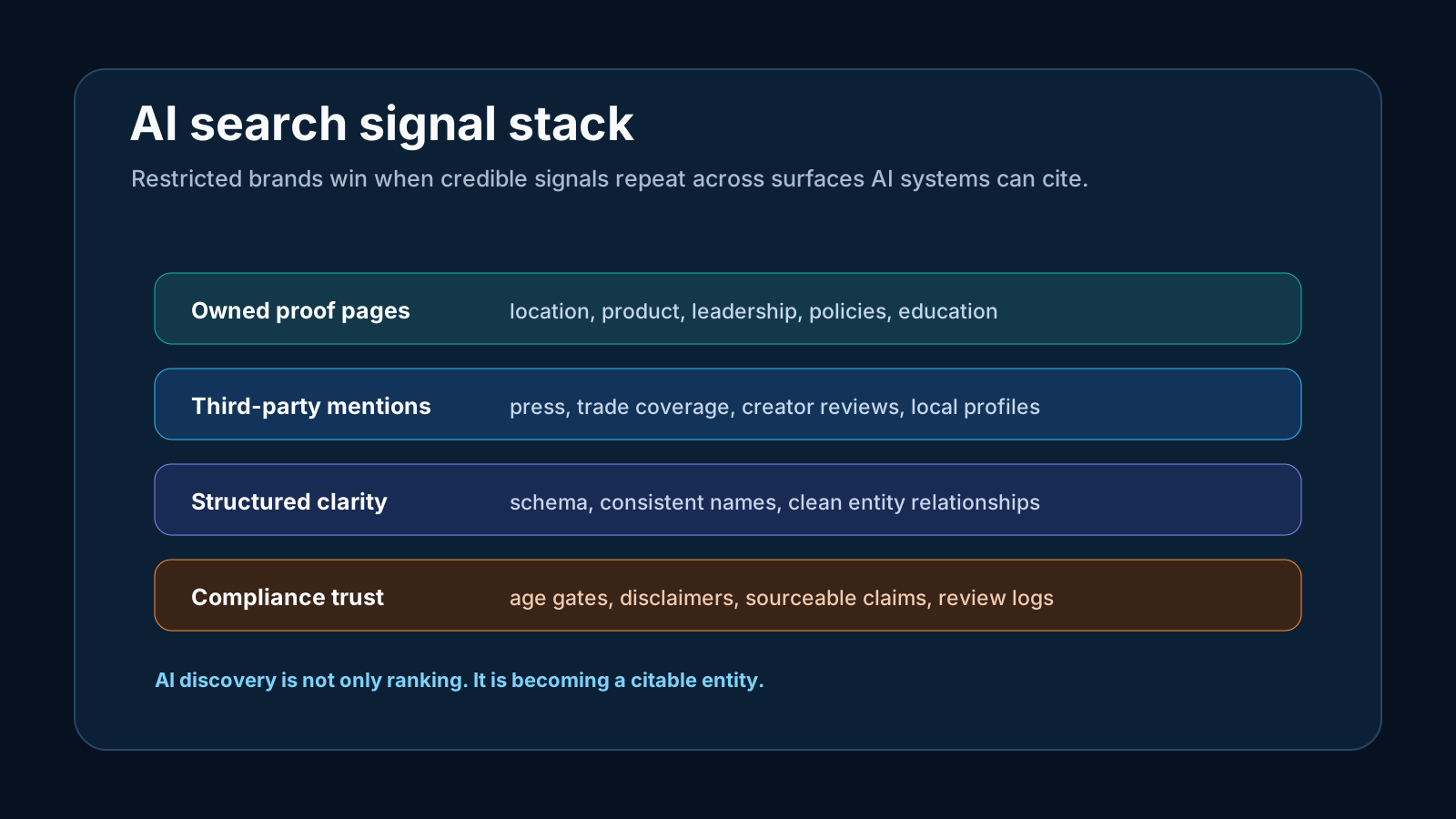
This is why a pure blog strategy is incomplete. Blog posts help, but they are not enough if the brand lacks durable proof pages. A good source layer includes location pages, product category pages, leadership bios, compliance policy pages, retail partner pages, FAQs, and educational explainers that other sites can reference.
The restricted brand problem
Cannabis search has extra friction. Some platforms restrict ads. Some mainstream publishers avoid direct product language. Some retailers outsource menus to platforms that do not communicate brand value well. Some brands use inconsistent names across packaging, websites, maps, and social profiles.
AI systems do not forgive that inconsistency. They compress it.
If one profile says the brand is a wellness company, another says lifestyle, another says cannabis, another says CBD, and another has outdated locations, the answer engine has to reconcile the mess. Often, it will simply avoid the brand or describe it generically.
This is where cannabis SEO and cannabis compliance need to work together. Visibility without compliance creates risk. Compliance without visibility creates invisibility.
How mentions become an asset
Third-party mentions are not just PR vanity. They are training and retrieval material.
A useful mention is specific. It names the brand consistently. It explains what the brand does. It links to a relevant page. It appears on a page that can be crawled. It does not rely on vague hype or unsupported claims.
| Mention type | Weak version | Strong version |
|---|---|---|
| Review | "Good shop" | Specific service, category, location, and experience |
| Press | Brand name dropped in a list | Context, quote, founder, product category, source link |
| Creator content | Short social post only | Crawlable post, transcript, or article with brand context |
| Local profile | Incomplete listing | Consistent name, hours, location, category, and policies |
The AI search opportunity is not to spam the web with mentions. It is to make legitimate mentions easier to interpret.
Structure matters more than cleverness
Structured data will not force an answer engine to cite you, but it helps reduce ambiguity. Organization schema, article schema, FAQ schema, breadcrumb structure, local business data, author information, and canonical URLs all help machines understand what a page is.
The content itself still has to carry the weight. A page that says "premium cannabis experience" twelve different ways gives AI very little to work with. A page that explains store policy, product category, location, purchasing constraints, education boundaries, and customer service expectations is more useful.
Local AI discovery is not only maps
For dispensaries and delivery operators, local discovery used to mean map pack visibility, review volume, and menu accuracy. Those still matter. The new layer is how answer engines combine local facts with broader web context.
A customer may not ask, "dispensary near me." They may ask, "Where can I find a reliable pickup option near downtown with clear online ordering?" That answer can pull from map data, business profiles, reviews, local articles, Reddit threads, store pages, and third-party menus. If those sources do not agree, the answer may become generic or skip the store entirely.
This creates a practical checklist:
- The business name should match across the website, Google Business Profile, menus, maps, social profiles, and local citations.
- Location pages should include parking, pickup, delivery, hours, age requirements, and service expectations.
- Menu links should be crawlable where possible and supported by brand-owned category pages.
- Reviews should be encouraged in a compliant way, with attention to specific service language rather than vague praise.
- Local PR should link to durable pages, not temporary campaign pages that disappear.
AI search does not replace local SEO. It makes local SEO less forgiving because it compresses inconsistent signals into one answer.
The compliance layer is part of visibility
Some cannabis brands hide useful information because they are afraid of compliance risk. That is understandable, but it often creates a different risk: vague content that cannot be cited.
The better move is not to make risky claims. It is to publish clear, defensible information:
- What products are sold and where, without making health promises.
- What age gates and purchase rules apply.
- What customers should expect from pickup, delivery, or in-store service.
- Which educational content is general and not medical advice.
- How the brand reviews claims and updates information.
That clarity helps customers, regulators, partners, and search systems.
What to build first
Start with the source layer before chasing AI visibility tricks.
- 1Fix name, address, category, and profile consistency.
- 2Build or update source pages for locations, products, policies, leadership, and education.
- 3Add clear internal links between services, local pages, and educational content.
- 4Earn specific third-party mentions that link to the right pages.
- 5Review AI answers manually and log whether they cite reliable sources.
This connects to the broader communications infrastructure problem. If the brand does not own a proof system, AI discovery exposes the gap.
A practical AI search audit
Run the same queries a customer might ask:
- "Best dispensary near [city] for pickup"
- "Cannabis brand with compliant education in [state]"
- "What is [brand name] known for?"
- "Where can I find [brand name] products?"
- "Is [brand name] licensed?"
Do not only read the answer. Capture the sources, missing facts, outdated details, and competitor mentions. Then map each issue back to a source-page fix, profile update, review program, or PR opportunity.
The brands that win AI search will not be the loudest. They will be the easiest to verify.
That is a different muscle than campaign publishing. It requires maintenance. Profiles drift, hours change, products rotate, state rules shift, and old pages keep circulating.
A quarterly AI discovery review should compare brand-owned facts, third-party facts, and answer-engine summaries side by side. The work is not glamorous, but it is how restricted brands keep control of the story as search interfaces become more compressed.
FAQ
AI search discovery is the process of making a brand understandable and citable in answer engines, not only visible in traditional search results.
Yes. Crawlable pages, internal links, structured data, and useful content still matter. AI search adds more emphasis on source material, third-party mentions, and entity consistency.
The stronger near-term opportunity is organic visibility through credible source material. Paid options may vary by platform and policy, so restricted brands should not depend on ads alone.
Start with location pages, product category pages, policies, leadership, education, FAQs, and compliance posture. These pages make the brand easier to understand and cite.
Track whether AI systems mention the brand, which sources they cite, whether facts are accurate, whether competitors dominate answers, and which source gaps keep recurring.